
 Radiation oncology is the use of radiation to treat cancer.
Radiation can be used by itself, or in conjunction with other modalities to fight cancer. Through the use of images from CT scans, a computer program is used to plan the radiation therapy in a way to maximize destruction of the tumor and minimize side effects.
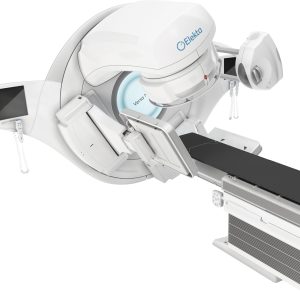
VSNT uses a linear accelerator with a multileaf collimater that is computer controlled to direct and form the radiation beam in such a fashion to put the radiation in the tumor and avoid normal tissue. This minimizes side effects associated with radiation therapy.
Depending on the type of tumor that is present, radiation may be used to eliminate the cancer, shrink the tumor, or provide pain relief for the patient. Radiation may be administered in a number of different protocols designed to accomplish the needs of the pet and pet owners, while maintaining a good quality of life for the patient.
We have found that most patients tolerate radiation therapy very well.
Stereotactic Radiotherapy (SRT)
This technique is also referred to as stereotactic ablative radiotherapy (SABR) or Stereotactic Body Radiotherapy (SBRT). This method of delivery allows us to treat your pet in 1-5 days. We use this technique most commonly for nasal tumors and for brain tumors. The incorporation of CT-guidance into our treatment system means that in many cases we can also safely treat adrenal tumors and lung tumors with SRT.
GRID Radiotherapy
GRID is also referred to as LATTICE Therapy or Spatially Fractionated Radiotherapy (SFRT). This is new technique in veterinary medicine. GRID is available using our equipment. GRID delivers a priming dose of radiation as tiny spheres drawn within the tumor. GRID is believed to stimulate the immune system to shrink the tumor. After the initial treatment, the tumor is then treated with 5 treatments on consecutive weekdays. In humans this technique has been used for tumors such as soft tissue sarcomas that are so large that they are unable to be removed. In some cases, an up to 80% response rate has been reported in the human literature. If your pet has a large/bulky tumor that is not a surgically accessible GRID radiotherapy may be an option to help shrink it.
Injection site sarcomas or vaccine associated sarcomas
These are locally aggressive tumors of cats that often recur following surgical removal. The average time for recurrence following surgical excision is 3 months. When surgery and radiation therapy are combined to treat this disease the median survival time is extended to two years. This is a tumor in which preoperative radiation therapy is considered optimal. Please consult a veterinary radiation oncologist to discuss further treatment options.
Mast cell tumors
Mast cell tumors are one of the most common skin tumors in the dog. Wide surgical excision with 3 cm margins is often curative for grade 1 and grade 2 mast cell tumors. If a wide surgical excision is not possible radiation therapy is used to control this tumor. Studies have shown that 88% of dogs treated with a combination of surgery and radiation therapy are disease-free at 5 years following treatment.
Meningiomas
These are the most common brain tumor seen in dogs. Treatment options consist of surgery, radiation therapy, or a combination of the two. A recent study has shown that the median survival time for dogs with meningiomas treated with radiation therapy is 20 months.
Nasal tumors
These tumors in the dog are often diagnosed after chronic nasal discharge. Skull radiographs or CT scans can be suggestive of a nasal tumor, however, the diagnosis can only be confirmed with a biopsy. The treatment of choice for nasal tumors is radiation therapy. Studies have shown that dogs with nasal tumors treated with radiation therapy have a median survival time of 1.3 years. Please consult with a veterinary radiation oncologist to discuss treatment options.
Oral melanomas
These are the most common oral tumor in the dog. The traditional treatment for this disease consists of a combination of surgery and radiation therapy. Studies have described a median survival time ranging from 8 months to one year following radiation therapy. A vaccine has recently become available–the oral melanoma vaccine is used in an attempt to prevent the spread of the tumor. It is important that local control of the tumor be achieved with a combination of surgery and radiation therapy prior to the administration of the vaccine.
Soft tissue sarcomas
These consist of a group of tumors that share a similar biological behavior and a similar response to treatment. This group includes tumors such as fibrosarcomas, hemangiopericytomas, nerve sheath tumors, and myxosarcomas. Soft tissue sarcomas are locally invasive and rarely spread to other parts of the body. Surgical excision with 3-cm margins can be curative. If wide surgical margins are not possible radiation therapy is used control this tumor. Studies have shown that 76% of patients treated with a combination of surgery and radiation therapy are disease-free 5 years following the completion of treatment.